What Brain Fog Actually Is
Brain fog is not laziness, aging, or "just stress." It is a measurable neuroinflammatory state driven by specific biological mechanisms. Understanding these mechanisms is the key to reversing them.
What Is Brain Fog?
Brain fog describes a cluster of cognitive symptoms: difficulty concentrating, forgetfulness, slow thinking, mental fatigue, and word-finding problems. It feels like thinking through a haze. You know you are normally sharper, but your brain will not cooperate.
It is not dementia, delirium, or normal aging. In most cases it is reversible once the root cause is identified. The problem? Most doctors do not investigate brain fog systematically, and most patients do not know what to ask for.
Signs of Brain Fog
- • Difficulty concentrating on tasks that used to be easy
- • Forgetting names, dates, or what you were about to say
- • Mental exhaustion disproportionate to effort
- • Slow processing speed (conversations feel too fast)
- • Word-finding difficulty ("tip of the tongue")
- • Feeling detached or "not fully present"
- • Trouble planning, organising, or making decisions
- • Reading the same paragraph three times
Brain fog affects hundreds of millions of people globally. It is one of the most commonly reported symptoms of Long COVID, perimenopause, chronic fatigue syndrome, and dozens of other conditions. The question is not "do I have brain fog?" You already know the answer. The question is "what is causing it?"
The Microglial Activation Cycle
Your brain contains billions of immune cells called microglia. When activated by infection, stress, poor sleep, blood sugar crashes, or environmental toxins, microglia release inflammatory cytokines — primarily IL-1β, IL-6, and TNF-α.
These cytokines physically reduce neurogenesis and dendritic sprouting. The result: slowed processing, impaired working memory, and the subjective experience of "thinking through fog."
"When your brain's immune cells stay switched on too long, they damage the connections between neurons. Your 'CEO brain' goes offline first — complex tasks collapse while simple ones still feel manageable."
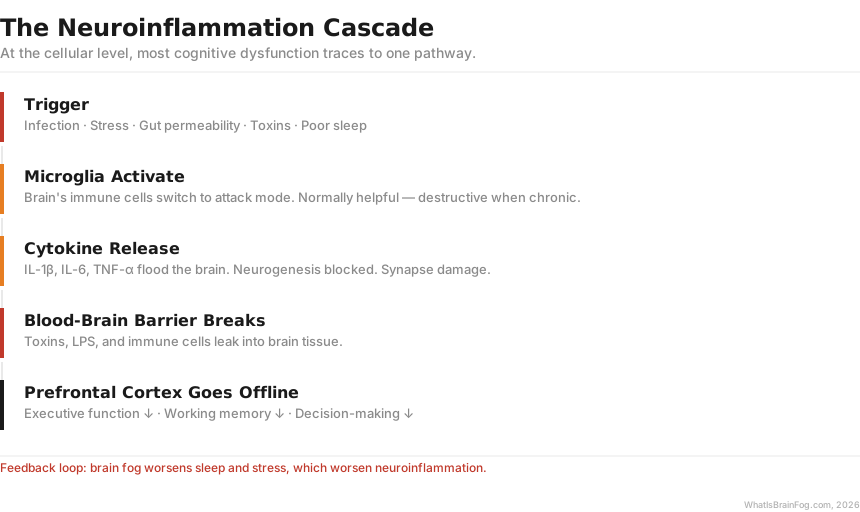
One Common Fog Cascade
Note: This is one well-documented pathway, not the only one. Brain fog can also arise from metabolic dysfunction, hormonal imbalance, autonomic dysfunction, or structural causes.
The Prefrontal Cortex Context
Your Brain's "Delicate Instrument"
The prefrontal cortex (PFC) — governing decision-making, working memory, attention, and executive function — is exceptionally sensitive to neuroinflammation. It is the first region to go "offline" when cytokine levels rise.
Translation: Your brain's decision-making centre shut down under inflammation — which is why you can still drive a car but can't compose an email.
The Pain & Fog Connection
If you have persistent pain AND brain fog, this isn't coincidence — pain competes for the same prefrontal cortex resources. Treating the pain may improve cognition more than any supplement.
Key Biomarker: hs-CRP
High-sensitivity C-Reactive Protein (hs-CRP) is the most accessible blood marker for systemic inflammation. Elevated hs-CRP is explicitly linked to reduced verbal fluency and impaired executive function.
References: Dantzer R et al. Nat Rev Neurosci. 2008; Arnsten AFT. Nat Rev Neurosci. 2009; Heneka MT et al. Lancet Neurol. 2015.
Explore All 64 Causes →